Case Study
Building Allkind Hard Kombucha
Creating a new beverage brand in one of the fastest-growing categories of 2020.
The Opportunity
By 2020, hard seltzers had become one of the fastest-growing categories in beverage. Nearly every new entrant competed on the same promise: fewer calories, fewer carbs, fewer ingredients.
For Odell Brewing, that approach felt fundamentally at odds with who we were as a craft brewery. Our brewers believed in carefully selected ingredients and thoughtful recipes, not stripping products down to the bare minimum.
Rather than asking, "How little can we put into this?" we asked a different question. What if the ingredients themselves became the reason to choose the product? That question became the foundation for Allkind.
Building a Brand Around Intention
The product strategy extended far beyond ingredient selection.
We wanted the brand itself to feel different from both traditional craft beer and wellness brands. It needed to feel optimistic rather than preachy, expressive rather than clinical, and inclusive rather than exclusive.
I championed the name Allkind because it captured those values in a simple, memorable way. It reflected kindness toward yourself, toward others, and toward the planet, while creating room for a broader brand story than simply "healthy alcohol."
Those same principles influenced everything that followed, from the visual identity and messaging to our partnership with 1% for the Planet.
Introducing an Unfamiliar Category
Launching Allkind wasn't simply about creating awareness. Before consumers could decide whether they preferred our product, they first needed to understand what hard kombucha was. That insight fundamentally changed our launch strategy.
Instead of relying on a single advertising campaign, we built a digital-first customer journey designed to introduce the category gradually. Short-form creative sparked curiosity, longer-form content explained the product, and sequential messaging encouraged consumers to continue learning before directing them to retail.
Rather than treating advertising as isolated tactics, we treated it as a progressive education experience.
Creating a Visual Language
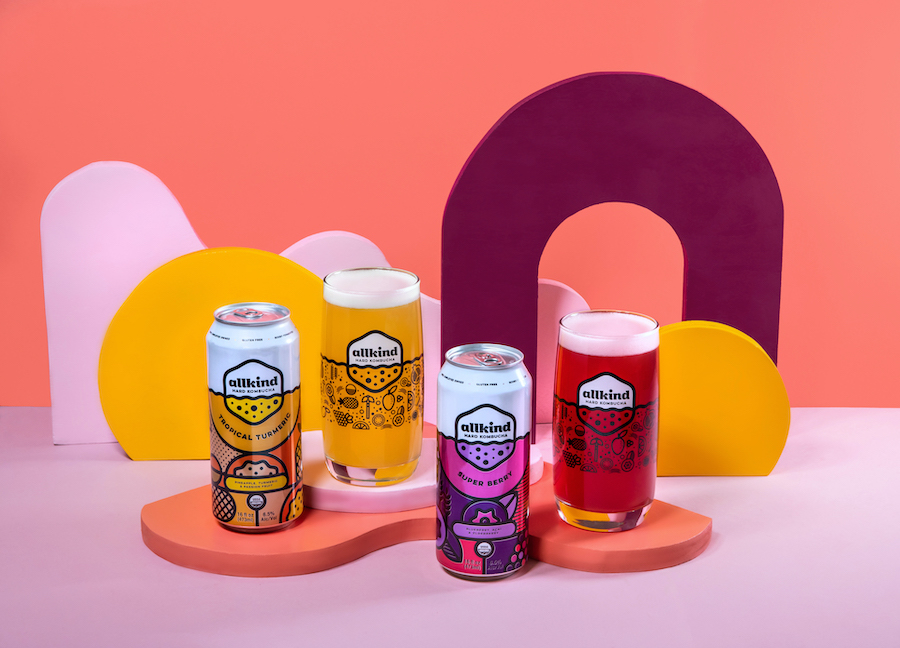
Launching a new brand meant creating more than a campaign. We needed a visual system that could scale across photography, social media, retail marketing, paid advertising, and future product launches.
I partnered closely with photographers, designers, and agency teams to develop creative briefs, art direction, and production concepts while also jumping into the creative process myself by designing custom product sets and experimenting with new photography styles.
The goal wasn't simply beautiful imagery. Every creative decision needed to reinforce the same positioning: bold, intentional, expressive, and crafted with purpose.
Launching During a Pandemic
The original launch plan relied heavily on the kinds of experiences that introduce people to unfamiliar products: festivals, sampling events, outdoor activations, and face-to-face conversations.
Then COVID changed everything.
Virtually overnight, many of the channels we had planned to use disappeared. Rather than waiting for conditions to improve, we shifted our focus toward digital discovery and education. The campaign became even more dependent on storytelling, video, influencer partnerships, and highly targeted media to introduce consumers to the category.
Looking back, the constraints ultimately reinforced one of our biggest strategic beliefs. If consumers couldn't experience the product in person, the brand itself had to do more of the work. Every touchpoint needed to educate, inspire confidence, and communicate why Allkind deserved a place in a rapidly growing category.
Results
The launch campaign was executed with a $50,000 paid media budget across the Denver and San Diego markets.
Despite launching an entirely new beverage category during one of the most disruptive periods in modern retail, the campaign successfully introduced Allkind to thousands of new consumers while establishing a scalable marketing foundation for the brand.
- $50K Paid media budget
- 360K Impressions
- 6,700 Video views
- 8% Video completion rate
Beyond the campaign metrics, the work established a differentiated brand identity, a repeatable creative system, and a go-to-market framework that continued to support the brand as it expanded into retail and on-premise channels.
Campaign Creative
My Role
Lead Brand Manager
Owned brand development from positioning through launch execution.
Product Positioning
Defined the ingredient-led differentiation strategy that set Allkind apart from hard seltzer competitors.
Brand Strategy
Championed the Allkind name and built a brand story rooted in optimism, expression, and inclusivity.
Go-to-Market Strategy
Designed the digital-first launch framework and adapted plans when in-person channels disappeared.
Creative Direction
Led art direction, creative briefs, and custom product sets across photography and campaign assets.
Digital Marketing
Built sequential ad journeys, influencer partnerships, and targeted media to educate consumers on hard kombucha.
Reflections
Looking back, Allkind wasn't simply a marketing campaign. It was an exercise in product commercialization.
The project reinforced that successful launches begin long before advertising. Positioning influences product development, naming, messaging, visual identity, creative direction, media planning, retail strategy, and every customer touchpoint that follows.
It also taught me the importance of building alignment across disciplines. Bringing a new product to market required close collaboration between brewers, sales teams, distributors, agency partners, designers, photographers, and retailers. Marketing wasn't the work of a single department. It was the thread that connected all of those teams around a shared vision.
Today, when I think about launching new products, I still come back to the same lesson. Great brands don't simply communicate what they are. They give people a reason to believe they belong.